
7 Best Accompaniments for Aged Cheese Boards
Aged cheese has already done the hard work. Months or years in the cellar have concentrated its butteriness, sharpened its savory edge, and, in the case of a well-aged Gouda or Parmigiano Reggiano, created those delightful little crystals that make guests pause mid-bite. The best accompaniments for aged cheese do not compete with that character. They soften the salt, brighten the richness, and give every nibble a reason to become another nibble.
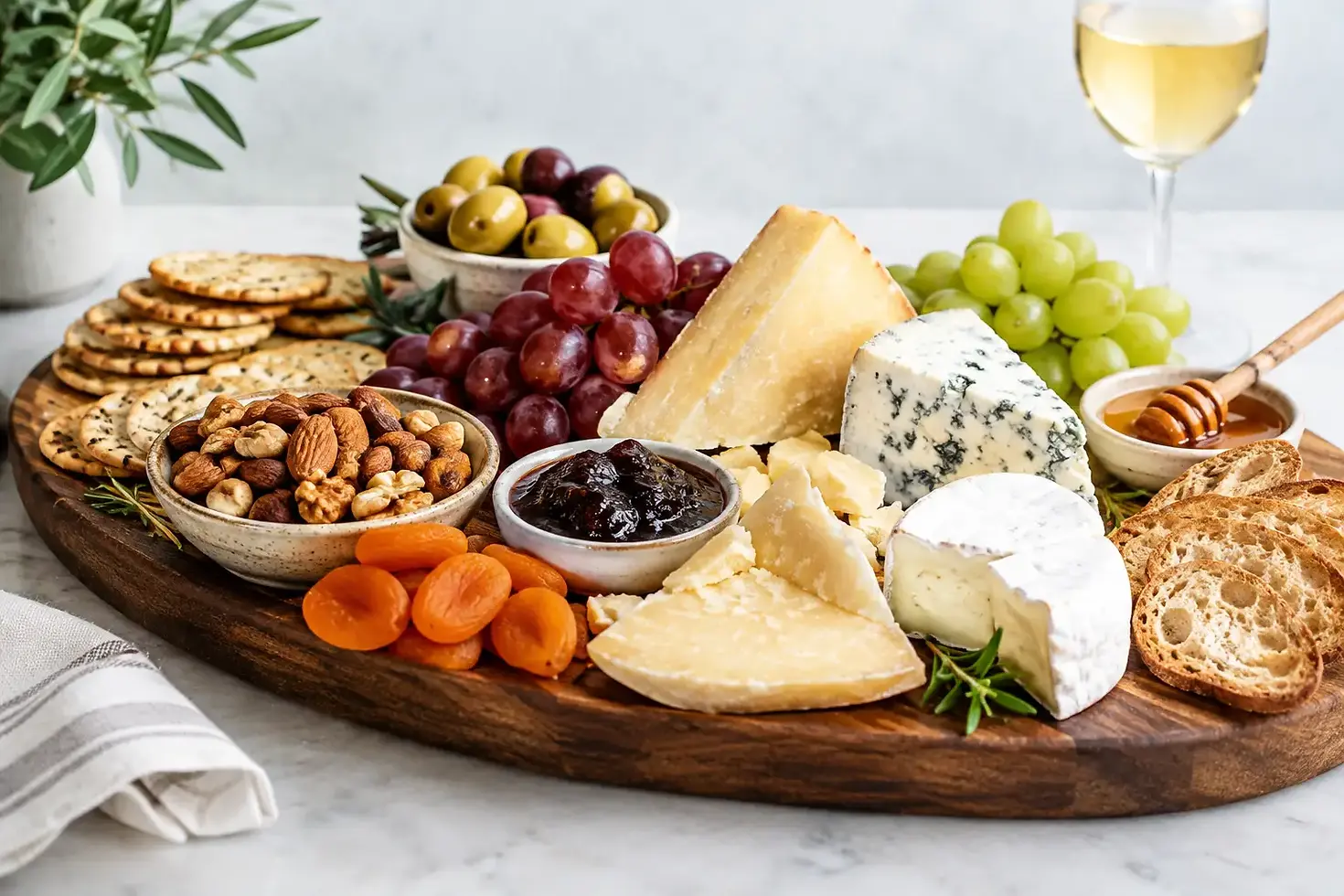
A great board is not about piling on every fancy item in the pantry. It is about contrast with a little intention: something sweet against something nutty, a crisp bite beside a creamy one, and a few salty favorites to make the whole spread feel generous. Whether you are setting out date-night snacks or feeding an Appy Hour crowd, here is how to build a board around the cheese that deserves center stage.
Start With the Personality of the Cheese
Not all aged cheeses want the same company. A nutty, caramel-toned aged Gouda can handle dark fruit, toasted nuts, and even a whisper of truffle. A crumbly, salty Parmesan-style cheese loves the juicy lift of pear or grapes. Aged cheddar welcomes apple, whole-grain mustard, and a little smoky cured meat.
The firmer and saltier the cheese, the more useful sweetness and acidity become. Think fig jam with a crystalline Alpine cheese, or tart cherry preserves with a dense, savory clothbound cheddar. For a cheese with a deep brown-butter character, such as aged Comté, choose accompaniments that echo its warmth rather than bury it under aggressive heat.
Blue cheese is its own splendid category. An aged blue needs sweetness, but it also needs restraint. Honeycomb, ripe pear, and buttery pecans work beautifully because they round out the blue’s peppery bite without turning the board into dessert.
The Best Accompaniments for Aged Cheese
Fresh fruit brings brightness
Fresh fruit is often the fastest way to make aged cheese feel less heavy. Apples and pears are especially reliable because their crisp texture holds up next to firm wedges and shards. Choose a sweet-tart apple for aged cheddar, or slice a ripe pear for Parmesan, blue cheese, or Gruyère.
Grapes are a classic for a reason, though they are best when used thoughtfully. Their cool juiciness refreshes the palate between richer bites. For a more polished look, use smaller clusters rather than scattering loose grapes across the board.
In colder months, persimmon slices, citrus segments, or pomegranate arils bring welcome color and acidity. In summer, fresh cherries, ripe peaches, or apricots make aged Gouda and nutty Alpine cheeses feel downright celebratory. Just keep very watery fruit in a small bowl or tuck it into one corner so it does not soak your crackers.
Preserves add a concentrated sweet note
A small spoonful of preserves can turn a bite of aged cheese into something restaurant-worthy. Fig spread is a natural match for firm sheep’s milk cheeses, aged Gouda, and blue cheese. Apricot preserves have enough tang to flatter sharp cheddar and Comté. Cherry preserves bring a dark-fruit richness that works especially well with smoky cheeses and cured meats.
For something less expected, try quince paste with Manchego or a good aged sheep’s milk cheese. Its floral, gently tart sweetness is dense enough to slice, so it feels tidy on a board and easy to serve. Hot pepper jelly can also be excellent with aged cheddar, but use it in moderation. The point is a flicker of heat, not a tongue-numbing detour from the cheese.
Honey earns its place when the cheese is salty or blue-veined. Serve it in a small dish with a spoon, or add a piece of honeycomb for a board that looks instantly more festive. If you are using truffle honey, pair it with an earthy, nutty cheese and avoid adding too many other bold flavors nearby.
Charcuterie brings savory depth
Aged cheese and cured meat share a love of salt, fat, and time. That makes them natural boardmates, but different meats create different moods. Delicate prosciutto or Serrano jamón offers a silky, lightly sweet contrast to aged Parmesan and Manchego. Speck brings smoke to the party and is particularly good beside aged cheddar or Gruyère.
For a more luxurious bite, Wagyu bresaola brings a clean, elegant beefiness without the heavy richness of some salamis. Fold it loosely rather than laying it flat. Those soft, ruffled folds make it easy for guests to grab and make the board look abundant without crowding it.
Spicy salami can work with aged cheese, especially Gouda and cheddar, but give it a cooling partner such as fruit, honey, or a mild spread. When every element is salty, smoky, and spicy, the board loses its sense of balance fast.
Nuts and crunchy bites keep the board lively
Aged cheese can be rich enough to make every bite feel substantial. Crunch keeps that richness from becoming one-note. Marcona almonds are a beautiful choice with Manchego, Comté, and aged Gouda because they are buttery rather than aggressively bitter. Toasted walnuts are wonderful with blue cheese and fig spread, while pecans add a sweet, mellow crunch beside sharp cheddar.
Crackers should support the cheese, not perform a solo. Choose simple water crackers, thin crisps, or a lightly seeded cracker with enough strength to carry a shard of cheese and a spoonful of jam. A bold rosemary or heavily spiced cracker can be delicious, but reserve it for a board with fewer competing flavors.
For an extra-special texture, add crostini or thin slices of toasted baguette. Their warm, toasty flavor makes a lovely base for aged cheese and charcuterie, though they are best added close to serving time so they stay crisp.
Briny accents need a light hand
Olives, cornichons, pickled cherries, and pickled onions can wake up a rich board, but they are supporting players. Aged cheeses are already often salty, so too much brine can make the entire spread taste flat and thirsty.
Use a small bowl of good olives or a modest cluster of cornichons near aged cheddar, Alpine cheese, or salami. Their acidity is especially helpful when your board includes richer meats. If you are serving blue cheese or Parmesan, lean more heavily on fruit and nuts than pickles. Those cheeses rarely need extra salt.
Build Each Bite, Not Just the Board
The most memorable boards give guests easy combinations to discover. With aged Gouda, try a thin slice of apple, a dab of fig spread, and a Marcona almond. With aged cheddar, add apple, a little whole-grain mustard, and folded speck. For Parmesan, keep it simple: a shard of cheese, a ripe pear slice, and a curl of Serrano jamón.
Blue cheese calls for a slower, sweeter bite. Start with a cracker or crostini, add blue cheese, then finish with honey and a pecan. It is rich, salty, sweet, and crunchy all at once - exactly what a party nibble should be.
You do not need to pre-assemble every bite for guests, but arranging compatible items near one another makes the board feel intuitive. Keep the fig spread close to the blue and the Gouda. Place apple near cheddar. Let the cured meats curve around the cheeses they suit best. It is a small styling move that makes the spread easier to enjoy.
Pour Something That Refreshes
Aged cheese appreciates a drink with lift. Sparkling wine is an easy all-purpose choice because its acidity and bubbles clean up the palate after salty cheese and charcuterie. Dry cider is excellent with aged cheddar, while a fruity red with modest tannins can be lovely beside aged Gouda, Comté, and bresaola.
For beer drinkers, a crisp lager, saison, or Belgian-style ale generally works better than something intensely bitter. Big, resinous IPAs can make aged cheese taste sharper and more bitter. If the board includes blue cheese and dark fruit preserves, a malty brown ale or a rich porter can be a very good match.
Nonalcoholic options deserve the same care. Sparkling water with citrus, tart cherry spritzers, or a dry ginger beer provide the brightness that a rich board needs. Serve drinks well chilled, especially when the cheese has been sitting out for a while.
A Few Board-Building Rules Worth Keeping
Give cheese time to warm slightly before serving. Firm aged cheeses show more aroma and flavor at cool room temperature than they do straight from the refrigerator. Thirty to 45 minutes is usually enough, depending on the room and the size of the piece.
Aim for two or three aged cheeses with distinct personalities rather than a crowded lineup of similar wedges. One sharp cheddar, one nutty aged Gouda or Comté, and one salty Parmesan-style cheese create plenty of variety. Add a blue only if your guests enjoy it, since its flavor can dominate a smaller spread.
For an effortless Ames gathering, Savor on Main can help turn these pairings into a polished charcuterie spread with distinctive cheeses, freshly sliced meats, and the little finishing touches that make it feel like an occasion. The best boards look lavish, but they should never make the host work like a line cook.
Set out a cheese knife for each variety, a few small spoons for spreads, and napkins that can handle a little honey or olive oil. Then let the board do what it does best: give people a reason to linger, compare favorite bites, and reach back in for just one more piece.


Comments