
Caviar Versus Roe for Your Next Party Board
A small spoonful can change the entire mood of a gathering. When you are weighing caviar versus roe for a date-night spread, brunch board, or a seafood-forward Appy Hour, the difference is not just price or packaging. It is about the fish, the texture, the salt level, and the kind of little luxury you want guests to remember.
Both bring that glossy, briny pop that makes simple accompaniments feel instantly more festive. But they shine in different ways, which is good news for anyone building a board that needs to feel generous, distinctive, and easy to enjoy.
Caviar Versus Roe: The Simple Difference
Roe is the broad category. It means fish eggs, whether they come from salmon, trout, whitefish, capelin, flying fish, or sturgeon. Roe can be cured with salt, smoked, seasoned, or served in many colors and sizes. Think bright orange salmon roe spilling over a blini, tiny black capelin roe tucked into sushi, or golden trout roe spooned over a deviled egg.
Caviar is roe from sturgeon that has been carefully salted and cured. In traditional culinary use, this is the distinction that matters: all caviar is roe, but not all roe is caviar. You may also see paddlefish or other domestic fish eggs sold with the word “caviar” on a label. Those can be delicious and are often more accessible, but asking what fish the eggs came from tells you far more than the name alone.
True sturgeon caviar is valued for its silky texture and layered finish. Depending on the variety, it may taste buttery, lightly nutty, mineral-rich, or oceanic, with salt that supports the flavor rather than takes over. The pearls are usually gray, brown, olive, or black, although color alone is never a reliable measure of quality.
Roe gives you a broader, more playful flavor range. Salmon roe, also called ikura, offers large orange pearls and a juicy, clean burst. Trout roe tends to be smaller and more delicate, with a mellow fresh-water character. Tobiko brings tiny, crisp eggs often associated with sushi. Whitefish roe is fine-textured, approachable, and terrific when you want a briny accent without making the whole spread feel formal.
Why the Price Gap Can Be So Wide
Sturgeon mature slowly. Some species take many years before they produce eggs, and caviar production requires careful harvesting, sorting, curing, and cold storage. That long timeline, combined with limited supply and painstaking handling, explains why a tin of sturgeon caviar costs more than a jar of salmon or trout roe.
That does not make roe the lesser choice. It simply serves a different purpose. If you are creating an intimate toast course for two, a small tin of quality caviar can be the star. If you are feeding a lively group and want plenty of color, texture, and seafood flair across the table, roe lets you be generous. A board does not need the most expensive ingredient to feel special. It needs an intentional mix of flavors that makes people reach for one more bite.
For a larger party, consider using caviar as the finishing touch and roe as the abundant supporting player. A spoonful of caviar on crème fraîche and a warm potato bite feels polished and celebratory. Salmon or trout roe can brighten smoked fish, cucumber rounds, mini pancakes, and creamy dips without requiring guests to ration every pearl.
How Caviar and Roe Taste on a Board
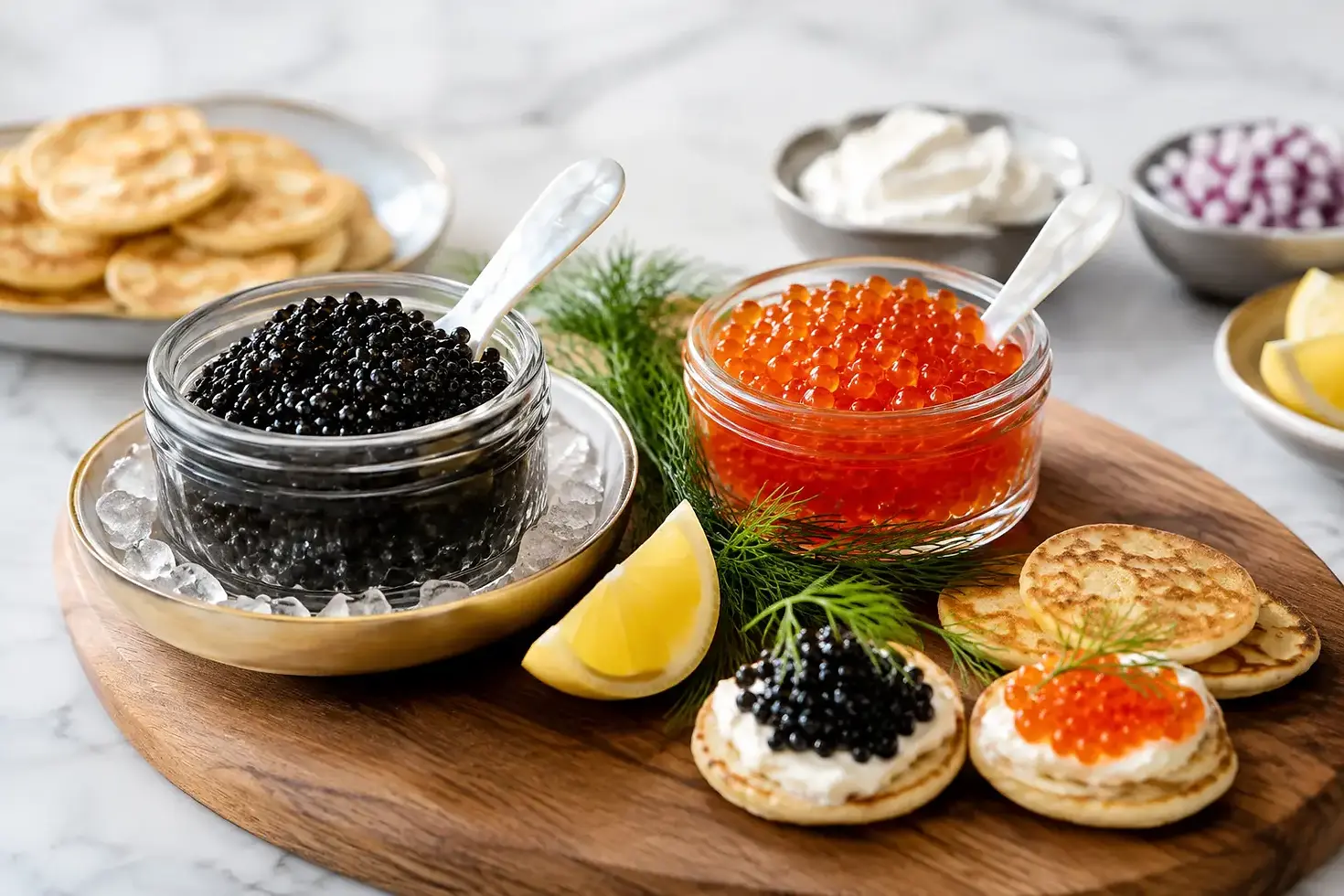
Caviar is best when the supporting cast stays quiet. Its appeal is subtle, and it can disappear next to intensely smoky meats, sharp pickles, or heavy garlic. Serve it chilled with blini or potato chips, crème fraîche, chives, and perhaps a little finely minced egg. The best bite is usually a cool, creamy, salty contrast that lets the caviar linger.
Roe is more flexible. Salmon roe is beautiful with smoked salmon, whipped cream cheese, dill, and lemon. Trout roe is excellent on potato pancakes or folded into a soft scramble for a brunch board. Tiny roe can add a pop of salinity to seafood dips, avocado toast, or cucumber slices with herbed cheese.
That difference makes caviar especially lovely for a focused ritual, while roe is perfect for building abundance. One asks guests to pause and taste. The other invites them to keep grazing.
If your spread includes charcuterie, give caviar some breathing room. A separate chilled dish beside the board works better than placing it between spicy salami and blue cheese. Roe can comfortably live closer to smoked seafood, mild cheeses, fresh herbs, and crisp vegetables. A SeaCuterie-style arrangement with smoked salmon, shrimp, lemon, cucumber, crackers, and a pair of roes can look lavish without being fussy.
Serving Details That Make a Difference
Temperature is everything. Keep caviar and roe cold until the moment you serve them, and nestle the serving tin or bowl over ice if it will sit out for more than a few minutes. Take only what you expect people to enjoy promptly, then return the rest to the refrigerator according to its package instructions.
For caviar, a mother-of-pearl, horn, wood, glass, or plastic spoon is the traditional choice. It avoids any possible metallic note and makes the presentation feel appropriately special. Modern stainless steel will not instantly ruin a bite, but if you have planned a caviar moment, a nonmetal spoon is an easy upgrade.
Do not stir aggressively or crush the eggs. Caviar and roe look their best when the pearls remain intact, and their texture is part of the experience. Open the container carefully, serve in small spoonfuls, and let guests build their own perfect bite.
A few accompaniments go a long way. For caviar, think plain kettle-cooked potato chips, lightly buttered toast points, blini, crème fraîche, chives, and hard-cooked egg. For roe, add lemon, dill, cucumber, avocado, smoked fish, soft cheese, and small warm potatoes. Champagne is a classic partner, but chilled vodka, dry sparkling wine, or mineral water with lemon all keep the palate fresh.
How to Choose What to Buy
Start with the occasion, not the label. For a two-person date night or a gift that deserves a little ceremony, choose caviar and give it a simple setting. For a brunch buffet, office gathering, or colorful appetizer board, choose one or two roes that can stretch across multiple bites.
Then consider your guests. Food-curious friends may love a side-by-side tasting of buttery sturgeon caviar and bright salmon roe. Guests who are newer to seafood often find mild trout or whitefish roe especially approachable. If someone says they do not like “fishy” flavors, serve the roe very cold with a creamy base and something crisp. Properly handled roe should taste clean and briny, not aggressively fishy.
Finally, read the package. Look for the species, country or farm of origin, curing style, storage guidance, and use-by date. “Malossol” is a term commonly used for lightly salted caviar. It can indicate a delicate, premium style, but freshness and careful storage still matter more than any single word on the label.
At Savor on Main, the most memorable caviar-and-roe moments are the ones that feel easy for the host: a chilled tin, a stack of good chips, a bowl of crème fraîche, and enough sparkling glasses for a toast. Pick the pearls that fit your occasion, serve them cold, and let that first bright pop do the rest.


Comments